A compassionate and structured therapeutic approach designed to support adults in processing trauma, rebuilding safety, and developing sustainable coping strategies in everyday life.
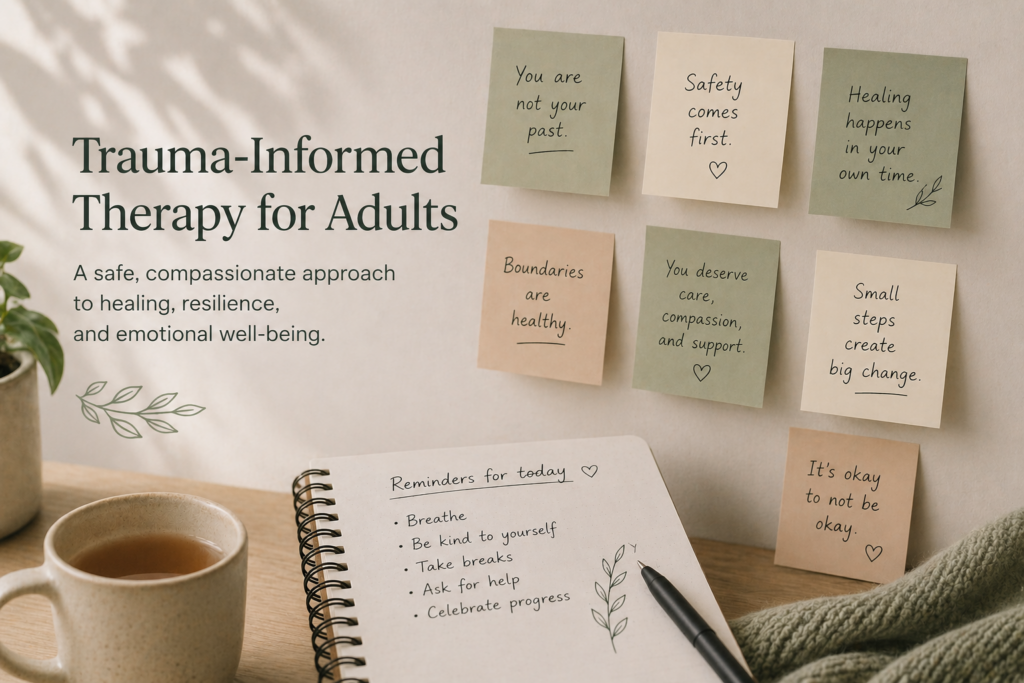
Trauma-informed therapy focuses on understanding how past experiences shape current thoughts, emotions, and behaviors. Rather than asking “what’s wrong,” this approach explores “what happened” and how it continues to impact your life.
This therapeutic process prioritizes safety, trust, and collaboration. Clients are supported in exploring difficult experiences at their own pace, without pressure, while building tools to regain a sense of control and emotional stability.
Goals
- Increase sense of safety and emotional stability
- Understand trauma responses and triggers
- Reduce overwhelm, anxiety, or emotional shutdown
- Build healthier coping and grounding strategies
- Strengthen self-awareness and self-compassion
Program Structure
- Weekly 50–60 minute sessions
- Individual, one-on-one format
- Flexible pace based on client readiness
- Focus on both present and past experiences
- Integration of practical tools between sessions
This approach is grounded in trauma-informed care principles, emphasizing safety, empowerment, and choice throughout the process. Therapy focuses on helping clients recognize patterns shaped by past experiences while developing new ways of responding in the present.
Sessions may include grounding techniques, emotional regulation strategies, and gentle exploration of difficult memories. The goal is not to relive trauma, but to process it in a way that reduces its impact and restores a sense of control.
Clients are supported in building resilience, improving emotional regulation, and reconnecting with themselves in a safe and structured environment.
Over time, clients often experience reduced emotional reactivity, improved sense of safety, and greater confidence in managing difficult thoughts, feelings, and situations.
Interested in this approach?
If you’re looking for a safe and supportive way to process trauma and build lasting coping strategies, this approach may be a good fit. Get in touch to learn more about how we can work together.